A sewer line failure ranges from a root intrusion that responds to clearing, to a collapsed pipe section that requires physical repair or lining. The difference between those two scenarios β and their costs β is determined by a CCTV camera scope, not a guess. Masters Plumbing Service's sewer techs in Carpinteria, CA run the camera first, show you exactly what's there, and recommend the repair method that actually resolves the specific failure.
π Call +1-855-718-1500 β We Respond Fast
The repair method β clearing, lining, or digging β should follow from the specific failure documented on camera. We show you that footage before you sign anything.
We push a CCTV camera through your sewer line before recommending anything. The footage shows blockage type, joint conditions, pipe material, depth, and any structural defects β precisely located by distance from the cleanout. You see what we see.
Trenchless lining costs significantly less than excavation in most scenarios and preserves landscaping, driveways, and hardscape. Not every sewer failure qualifies for lining β we tell you honestly when it does and when it doesn't.
Fully collapsed pipe sections, severe pipe belly (negative grade), and pipe offset severe enough to block flow require physical excavation to repair. We locate the defect precisely on camera, mark the dig site, call for utility locates, excavate cleanly, replace the failed section, and backfill and restore the surface.
This documentation matters for home sales, insurance claims, and warranty enforcement. We provide it as standard practice, not as an add-on.
Sewer line problems fall into distinct categories β each with its own repair approach. Here's how we handle each one.
Root cutting is a temporary measure if the joints remain open. After cutting, we assess whether pipe lining to seal the entry points is warranted, or whether the joints are tight enough that regular maintenance clearing is the right long-term plan.
Cured-in-place pipe lining installs a flexible epoxy-saturated felt liner inside the existing pipe. The liner is inverted or pulled into position, inflated against the host pipe, and cured with hot water or steam. The result is a new, jointless pipe inside the old one β rated for 50+ years of service life.
When pipe sections have fully collapsed, when the pipe grade has reversed (creating a belly that holds standing sewage), or when root intrusion is too severe for lining to hold, traditional excavation is the correct repair. We locate the defect precisely on camera, mark the excavation footprint, call for utility locates, and dig to the pipe depth.
A standalone camera inspection β without any clearing or repair β is useful for pre-purchase due diligence, insurance documentation, or understanding why a drain is performing poorly before committing to a repair approach. We run the camera, record footage with distance markers, and provide a written scope report.
Active sewage backup into a structure is an emergency requiring immediate response. We dispatch on an emergency basis, clear the blockage to restore drain function, contain and document the affected area, and schedule the camera scope to assess underlying cause β either same-day or at the earliest opportunity.
A written maintenance record documenting each cleaning and camera finding is useful evidence for insurance claims and demonstrates proactive maintenance if a catastrophic failure occurs.
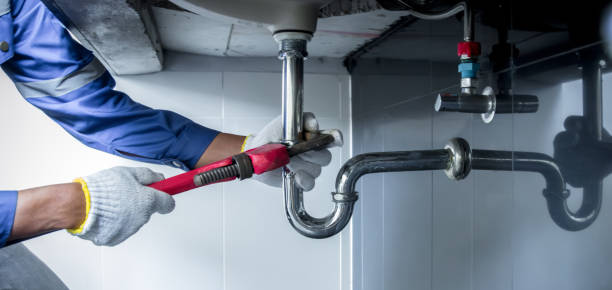
Here's how a Masters Plumbing Service sewer line call plays out β from your first call to a repaired, flowing sewer.
If sewage is actively backing up, we dispatch immediately. If it's a recurring slow drain situation or a pre-purchase scope request, we schedule the earliest available slot. Either way, the first on-site action is accessing the cleanout.
We push the camera from the cleanout and run the full line to the municipal connection or septic tank, recording footage with footage distance markers. Blockage location, pipe material, joint condition, pipe deformation, and grade issues are all documented on the recording.
Based on camera findings, we present the repair options appropriate for what was found β clearing and maintenance, trenchless lining, spot excavation, or full replacement β with flat-rate pricing for each. We explain the trade-offs between methods clearly.
Approved repairs proceed. After completion, we run the camera again to document the repaired state. For lining jobs, the post-cure scope confirms liner adhesion and full internal diameter. For excavation repairs, the scope confirms grade and joint quality.

My main sewer line backed up on a Saturday. Masters Plumbing Service came out within 2 hours, cleared the blockage with a cable machine to restore drain function, then ran the camera. The footage showed root intrusion at three clay tile joints between 22 and 46 feet from the cleanout. They presented a trenchless lining option vs. spot excavation at each joint with pricing for both. I went with lining β completed on Monday, camera confirmed clean and sealed joints, permits closed the following week.
Pre-purchase scope done through Masters Plumbing Service. Tech ran the camera, gave clear narration on the footage, and identified that the main cast iron line had interior corrosion narrowing the pipe to about 60% of its original diameter. We used that report to request the sellers replace the line β and they did.
Tree roots had invaded our sewer line every year for six years. Annual clearing costs were adding up. Masters Plumbing Service scoped, confirmed the root entry points, and lined the 70-foot residential run. No roots at the 18-month re-scope. The liner sealed every joint the roots had been using.

Our sewer technicians are familiar with the pipe ages, materials, and infrastructure conditions common in Carpinteria neighborhoods, which speeds up diagnosis and repair planning.

Our sewer crew is in Carpinteria today. Same-day emergency response available β call now.
π Call +1-855-718-1500 Now